
Industrial Electrician Sunshine Coast
Installation, maintenance, compliance testing and solar for Sunshine Coast factories, warehouses and workshops – from a licensed electrical contractor that plans work around your operations.
Get a Free Quote
Tell us about the job and we will be in touch.
Prefer to talk? Call 0427 468 568
Power That Keeps Your Site Running
Industrial sites run heavier loads, longer hours and harsher environments than most buildings. Unplanned downtime costs money, so the electrical installation needs to be reliable, well maintained and properly documented.
FCS Electrical and Solar provides industrial electrical installation, maintenance and upgrades for factories, warehouses and workshops across the Sunshine Coast. Because we also install solar, we can help reduce energy costs on sites that use most of their power during the day.
- Three-phase power and machinery connections
- Distribution boards and upgrades
- High-bay LED lighting
- Fault-finding and repairs
- Planned maintenance
- Compliance testing and records
- SitesFactories, warehouses and workshops
- WorkInstallation, upgrades and maintenance
- EnergyIndustrial solar and LED upgrades
- LicensedElectrical Contractors Licence 91222
Planned Maintenance and Fault-Finding
Preventative maintenance catches problems before they stop production.
Scheduled Inspections
Regular checks of boards, connections and equipment on a plan that suits your site.
Thermal Imaging
Hot spots in switchboards and connections found before they fail.
Fault-Finding
Methodical diagnosis of tripping, motor and control faults.
Lighting Upkeep
High-bay and emergency lighting kept working and compliant.
Upgrades
Board, circuit and capacity upgrades as your operations grow.
Documentation
Testing results and records kept in order for audits.
Compliance and Safety Testing
Test & Tag
Portable equipment tested to AS/NZS 3760 – typically every six months in factories and workshops.
Learn moreEmergency & Exit Lighting
Six-monthly inspection and discharge testing to AS/NZS 2293.2, with a logbook.
Learn moreRCD Testing
Safety switches tested for correct operation and recorded.
Learn moreIndustrial Solar and Energy Efficiency
Industrial sites usually use most of their power during daylight hours, when solar panels generate the most. That means a larger share of the solar output is used on site rather than exported.
Combining solar with LED lighting upgrades and good maintenance can lower demand from the grid. A site energy assessment shows what is realistic for your roof, supply and usage.
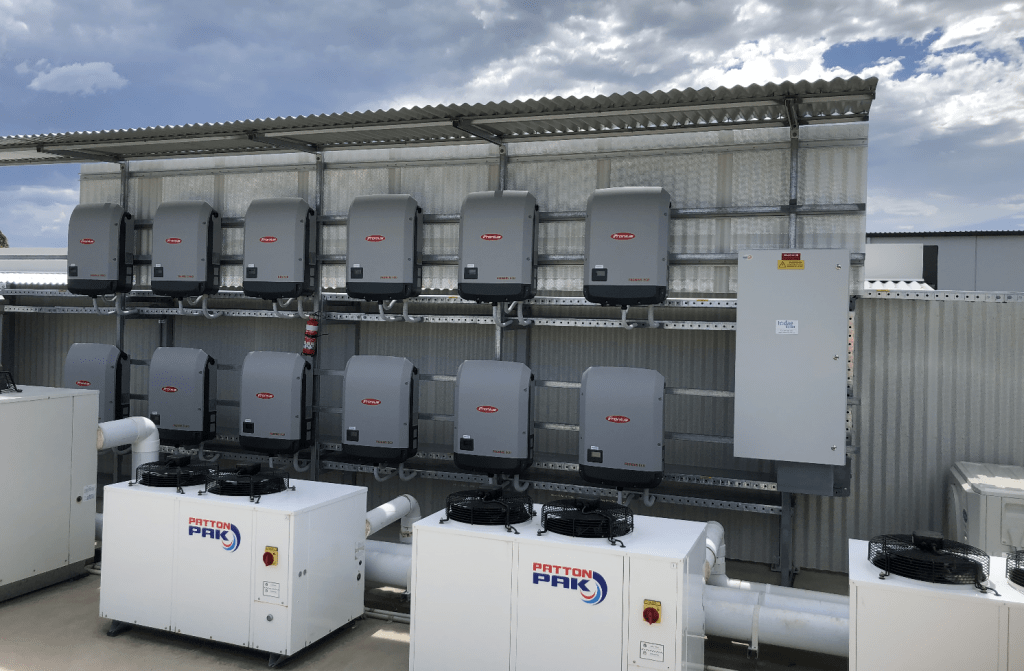 Industrial inverters
Working Safely on Your Site
We follow your site inductions and safety requirements, prepare safe work method statements where needed, and use proper isolation and lock-out procedures.
Work is scheduled around your operations wherever possible, so shutdowns are planned and kept as short as practical.
- InductionsYour site rules followed
- SWMSPrepared for higher-risk work
- IsolationLock-out and tag-out procedures
- SchedulingPlanned around production
From Site Assessment to Sign-Off
Site Assessment
We look at the site, equipment and what you need.
Scope & Quote
Clear scope, inclusions and timing.
Scheduling & Works
Work planned around your operations.
Test & Document
Testing, certification and records provided.
Industrial Electrical Across the Sunshine Coast
Based in Buderim, we work across the Sunshine Coast. Call to check availability for your suburb.
Industrial Electrical FAQs
What does an industrial electrician do?
An industrial electrician installs, maintains and repairs electrical systems in factories, warehouses, workshops and processing sites. Typical work includes three-phase power, machinery connections, distribution boards, high-bay lighting, fault-finding and preventative maintenance. Industrial sites also need compliance testing, such as test and tag and emergency lighting checks.
What is the difference between commercial and industrial electrical work?
Commercial work usually covers offices, shops and hospitality venues, with a focus on lighting, power, data and fit-outs. Industrial work involves heavier loads and harsher environments, such as three-phase machinery, motors, larger switchboards and equipment that runs for long hours, and often needs closer coordination with production schedules.
How often should equipment in a factory or workshop be tested and tagged?
Under AS/NZS 3760, equipment in factories, workshops and places of manufacture, assembly, maintenance or fabrication is typically tested every six months. Construction sites need testing every three months. Your risk assessment may call for shorter intervals for equipment that is moved often or used in harsh conditions.
How often do emergency and exit lights need testing?
AS/NZS 2293.2 requires emergency and exit lighting to be inspected and discharge-tested every six months, so the lights stay on for the required time during a power failure. Results should be recorded in a logbook, and failed fittings or batteries replaced promptly. These checks are often scheduled alongside test and tag.
Can solar reduce running costs for an industrial site?
Often, yes. Industrial sites usually use most of their power during daylight hours, when solar panels generate the most, so a larger share of the solar output is used on site rather than exported. Combining solar with LED lighting upgrades and good maintenance can lower demand from the grid. A site energy assessment shows what is realistic.
Other Services You Might Need
Talk to Us About Your Site
Electrical, lighting, compliance or solar – send us the details and we will come back to you with clear advice and a written quote.
- Call0427 468 568
- Emailjosh@futurecs.com.au
- Based inBuderim, Sunshine Coast QLD
- LicensedElectrical Contractors Licence 91222
Call Us on 0427 468 568
Or use the free quote form at the top of this page and we will be in touch.
