
Commercial Solar Installation on the Sunshine Coast
Rooftop solar for offices, shops, workshops, warehouses and farms – designed around your daytime energy use and installed by a licensed electrical contractor with minimal disruption to trading.
Get a Free Quote
Tell us about the job and we will be in touch.
Prefer to talk? Call 0427 468 568
Put Your Roof to Work During Trading Hours
Most businesses use the bulk of their electricity during the day – exactly when solar generates. That makes commercial solar one of the most direct ways to reduce energy costs and limit exposure to future price rises.
FCS Electrical and Solar handles both the electrical and solar sides of the job, from switchboard capacity and three-phase supply through to design, approvals and installation. We work with offices, retail, workshops, warehouses, farms and strata properties across the Sunshine Coast.
- Design based on your actual usage data
- Switchboard and three-phase capacity assessed
- Energex application managed for you
- Installation planned around trading
- SuitsOffices, retail, workshops, warehouses, farms
- CoversElectrical and solar under one contractor
- ManagesEnergex connection and paperwork
- LicensedElectrical Contractors Licence 91222
Why Sunshine Coast Businesses Are Going Solar
Every site is different, so we focus on the factors that matter for yours rather than generic payback claims.
Daytime Use, Daytime Generation
Solar output lines up with business hours, so more of it is used on site.
Lower Energy Costs
Generating your own power reduces what you buy from the grid.
Price-Rise Protection
Less reliance on the grid means less exposure to future tariff increases.
Sustainability Reporting
Renewable generation supports ESG goals and what your customers expect.
Demand and Tariffs
Design can account for time-of-use tariffs and demand charges.
Resilience
Paired with storage, critical loads can keep running during outages.
Designing a System Around Your Energy Use
Data Review
Twelve months of bills or interval meter data show usage patterns and demand peaks.
Tariffs & Demand
Time-of-use and demand charges shape how a system should be sized.
Roof & Structure
Area, orientation, pitch and structure – or ground and carport options.
Supply & Switchboard
Three-phase supply and switchboard capacity checked and planned.
Approvals, Grid Connection and Compliance
Every grid-connected system in South East Queensland needs a connection application to Energex, which sets conditions such as export limits. Larger commercial systems can require additional technical assessment and protection equipment, which can extend timeframes – we explain any conditions before installation.
Systems up to 100 kW can create small-scale technology certificates (STCs), usually applied as an upfront discount. Larger systems may instead create large-scale generation certificates (LGCs) over time. Tax treatment varies by business, so talk with your accountant, and check the Clean Energy Regulator for current certificate rules.
- EnergexConnection application and conditions
- CertificatesSTC or LGC pathway explained
- CertificationElectrical testing and compliance paperwork
Commercial Battery Storage and Ongoing Maintenance
Batteries can store surplus solar, help reduce peak demand charges on some tariffs and keep critical equipment running during outages if designed for backup. For businesses that use most of their solar during the day, the case is weaker – a data-based assessment helps decide.
Once your system is running, scheduled inspections and monitoring help protect your investment. We can inspect panels, isolators and inverters, and use thermal imaging to spot hot spots before they become failures.
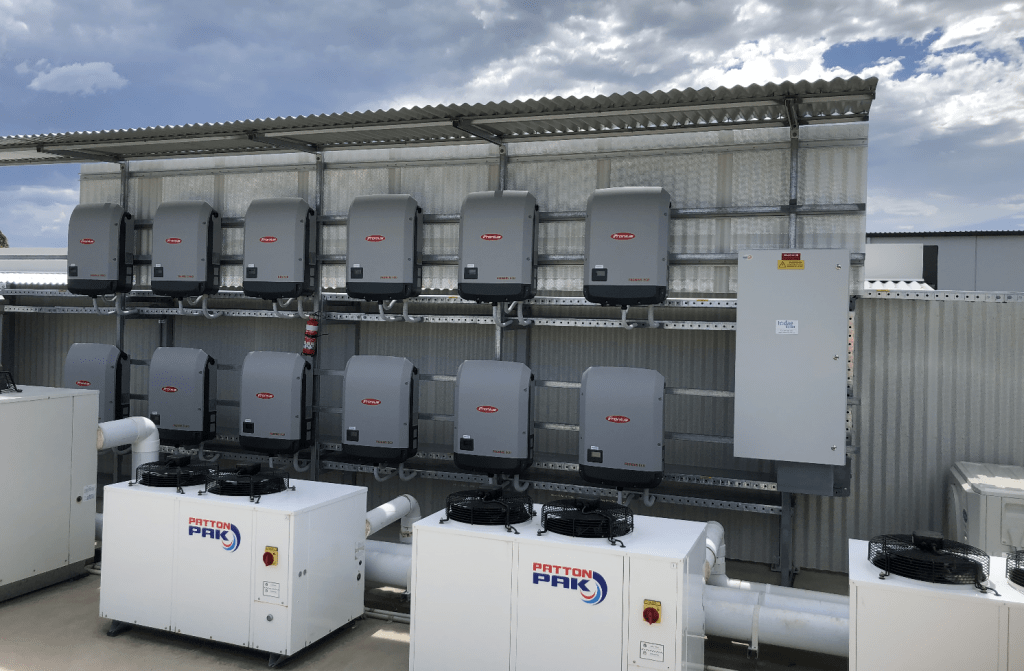 Plant room inverters
How Commercial Solar Projects Run
Consultation & Data
We review your bills or interval data and goals.
Site Assessment & Design
Roof, structure, switchboard and supply assessed; system designed.
Proposal & Approvals
Written proposal, then the Energex application.
Install & Commission
Installed around trading, tested, commissioned and monitored.
Commercial Solar Across the Sunshine Coast
Based in Buderim, we work across the Sunshine Coast. Call to check availability for your suburb.
Commercial Solar FAQs
What size commercial solar system does my business need?
It depends on how much electricity your business uses during daylight hours, your roof area and structure, your connection type and any network export limits. The best starting point is twelve months of bills or interval meter data, which shows usage patterns and demand peaks. A site assessment then confirms what can practically be installed.
Are there incentives for commercial solar in Australia?
Systems up to 100 kW can create small-scale technology certificates (STCs), usually applied as an upfront discount. Larger systems may be eligible to create large-scale generation certificates (LGCs) over time instead. Tax treatment varies by business, so speak with your accountant, and check the Clean Energy Regulator for current certificate rules.
Does commercial solar need approval from Energex?
Yes. Any system connecting to the grid in South East Queensland requires a connection application to Energex, which sets conditions such as export limits. Larger commercial systems can require additional technical assessment and protection equipment, which can extend timeframes. We manage the application and explain any conditions before installation.
Can solar be installed without disrupting my business?
In most cases, much of the work happens on the roof while the business keeps trading. A short power shutdown is usually needed to connect the system at the switchboard, and this can often be scheduled outside trading hours. We plan access, safety zones and shutdown timing with you during planning.
Is battery storage worth it for a business?
It depends on your tariff and usage. Batteries can store excess daytime solar, reduce peak demand charges on some tariffs, and keep critical equipment running during outages if designed for backup. For businesses that use most of their solar during the day, the case is weaker. A data-based assessment helps decide.
Other Services You Might Need
Request a Commercial Solar Assessment
Electrical, lighting, compliance or solar – send us the details and we will come back to you with clear advice and a written quote.
- Call0427 468 568
- Emailjosh@futurecs.com.au
- Based inBuderim, Sunshine Coast QLD
- LicensedElectrical Contractors Licence 91222
Call Us on 0427 468 568
Or use the free quote form at the top of this page and we will be in touch.
