
Solar Repairs and Servicing on the Sunshine Coast
Solar not producing what it should? Our licensed electricians test, diagnose and repair panels, inverters, isolators and wiring – and service systems to keep them safe and performing.
Get a Free Quote
Tell us about the job and we will be in touch.
Prefer to talk? Call 0427 468 568
Get Your Solar System Back on Track
A solar system that quietly stops working can cost you for months before anyone notices – the only sign is a power bill that is higher than expected. Because panels produce DC voltage whenever there is daylight, faults also need careful, qualified diagnosis.
FCS Electrical and Solar is a licensed electrical contractor based in Buderim. We test the system properly, find the cause, explain your options and fix the problem. If your system was installed by another company, contact us with the system details and we will let you know how we can help.
- Fault-finding on panels, inverters and isolators
- Electrical safety testing after every repair
- Clear explanation of repair vs replace
- Written quote before work proceeds
- DiagnoseInverter codes, isolators, wiring, earth faults
- RepairFaulty components and damaged cabling
- ServiceInspection, testing and checks
- Carried out byLicensed electricians (Lic. 91222)
Signs Your Solar System Needs Attention
If you notice any of these, book a check rather than waiting for the next bill.
Lower Generation
Output noticeably down compared with the same season last year, or flat on sunny days.
Zero Output in the App
Your monitoring shows nothing – sometimes a Wi-Fi dropout, sometimes a real fault.
Fault Codes or Red Lights
Error messages, red lights or beeping from the inverter.
Tripping or Burning Smells
A tripping safety switch or a burning smell near an isolator needs urgent attention.
Higher Power Bills
A jump in your bill without a change in usage can point to a system fault.
Storm or Pest Damage
Wind, hail, debris or animals can damage panels, cabling and conduit.
Common Solar Faults We Repair
Inverter Faults
Testing to find whether the issue is the inverter itself, its protection or the supply to it.
DC Isolators
Checking rooftop and inverter-side isolators for water ingress, heat damage and recalled models.
Cabling & Connectors
Replacing UV-damaged cable, conduit and failed connectors on the array.
Earth & Insulation Faults
Insulation resistance testing to track down faults the inverter has detected.
Storm & Pest Damage
Assessing and repairing damage from weather, debris and wildlife.
Monitoring Dropouts
Reconnecting monitoring so you can see what your system is doing.
Solar Panel Servicing and Maintenance
A routine service is a planned check of the whole system: a visual inspection of panels and mounting, electrical testing of each string, a check of isolators and protection devices, and a review of the inverter’s readings and fault history.
Follow your panel and inverter manufacturers’ maintenance guidance. Many owners book a check every one to two years, or sooner after a severe storm or a drop in output. Homes near the beach can benefit from more frequent checks, as salt and moisture affect isolators, connectors and mounting hardware.
- Panel, mounting and roof penetration checks
- String voltage and current testing
- Isolator and protection checks
- Inverter readings and fault log review
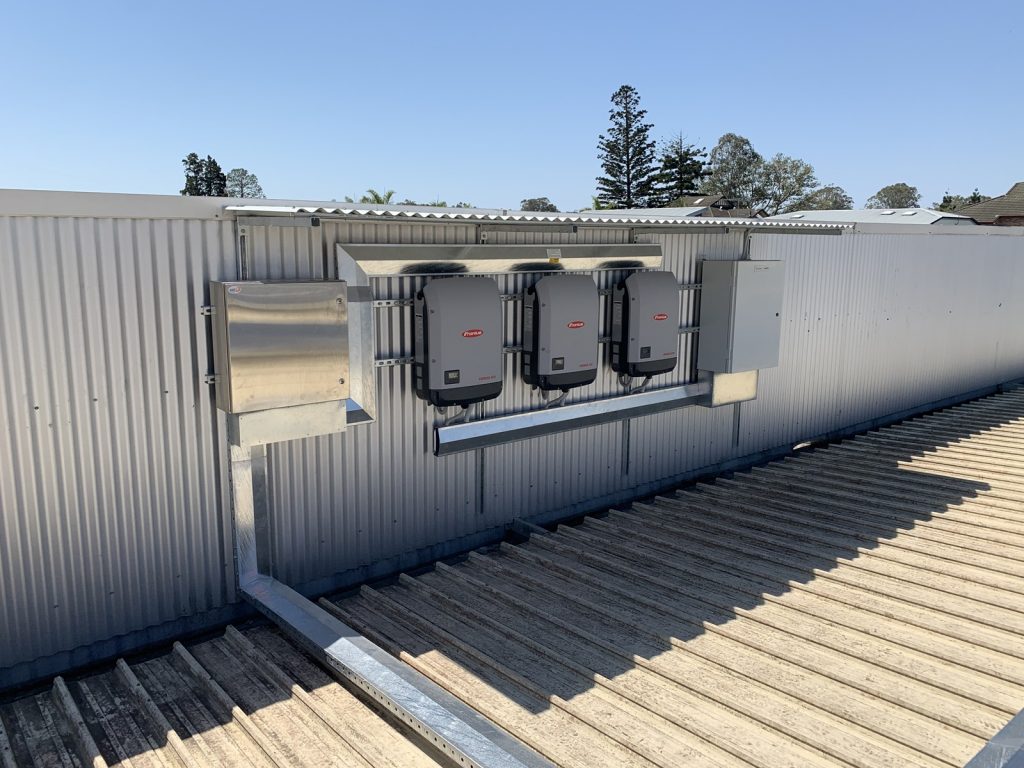 Service check
Inverter Repair or Replacement?
Some inverter faults can be fixed – a tripped protection device, a loose connection or a communication issue outside the unit. Internal component failures are often not economical to repair, particularly on older units that are out of warranty.
We weigh up age, warranty status, parts availability and cost, and tell you plainly which option makes sense. If replacement is the answer, it can be a good time to move to a hybrid, battery-ready inverter.
- AgeHow long the unit has been running
- WarrantyWhether a manufacturer claim applies
- PartsAvailability and repair cost
- UpgradeHybrid, battery-ready alternatives
How Solar Repairs Work
Describe the Problem
Tell us what you are seeing – photos of error codes help.
On-Site Diagnosis
We test the array, isolators and inverter to find the cause.
Written Quote
Options explained, with a clear quote for the repair.
Repair & Test
Fixed, safety tested and explained, with recommendations.
Solar Repairs Across the Sunshine Coast
Based in Buderim, we work across the Sunshine Coast. Call to check availability for your suburb.
Solar Repairs & Servicing FAQs
Why has my solar system stopped producing power?
Common causes include an inverter fault, a tripped circuit breaker or isolator, a failed DC isolator, damaged cabling, or an earth fault the inverter has detected. Sometimes the system is working but the monitoring has simply lost its Wi-Fi connection. Because panels produce DC voltage whenever there is daylight, faults should be diagnosed by a licensed electrician.
Can a solar inverter be repaired?
Some inverter faults can be fixed, for example a tripped protection device, loose connection or communication issue outside the unit. Internal component failures are often not economical to repair, especially on older units out of warranty, and replacement is usually the practical option. We test the system and check warranty status before recommending repair or replacement.
How often should solar panels be serviced?
Follow the panel and inverter manufacturers’ recommendations, which often suggest periodic inspection. Many owners book a check every one to two years, or sooner after severe storms or if generation drops. Homes near the beach may benefit from more frequent checks because salt and moisture can affect isolators, connectors and mounting hardware.
Should I clean my solar panels myself?
Rain removes a lot of dust, but bird droppings, leaves and salt build-up can reduce output. Climbing onto a roof is a safety risk, and harsh chemicals, abrasive brushes or high-pressure washers can damage panels or affect warranties. Check the manufacturer’s cleaning guidance, or ask about cleaning as part of a service.
Can you look at a solar system another company installed?
Contact us with your system details and we will let you know how we can help. Having the original installation paperwork, the inverter model and any warranty details on hand speeds up diagnosis and makes any manufacturer warranty claim easier.
What is a DC isolator and why does it fail?
A DC isolator is a switch that disconnects the solar panels from the inverter for maintenance and emergencies. Rooftop and inverter-side isolators are exposed to heat, UV and moisture, and water ingress can cause faults or, in rare cases, fire. Some isolator models have been recalled, so checking them is a standard part of a solar inspection.
Other Services You Might Need
Book a Solar Repair or Service
Electrical, lighting, compliance or solar – send us the details and we will come back to you with clear advice and a written quote.
- Call0427 468 568
- Emailjosh@futurecs.com.au
- Based inBuderim, Sunshine Coast QLD
- LicensedElectrical Contractors Licence 91222
Call Us on 0427 468 568
Or use the free quote form at the top of this page and we will be in touch.
